Long-haul truck driver is a fairly well-paid profession, especially in Europe. Many drivers aspire to find employment as a long-haul driver in a European country. But before that, they ask themselves: what work and rest regime will await them, how to drive correctly according to the Tachograph? It’s worth noting that European legislation norms are stricter than domestic ones. Violation of these norms can result in quite a large fine.

A driver’s work and rest regime is the period during which a driver can continue moving according to the route and schedule. When the driver is behind the wheel, it’s considered working time. The amount of required working time varies from country to country. Continuous working time averages 4 hours.

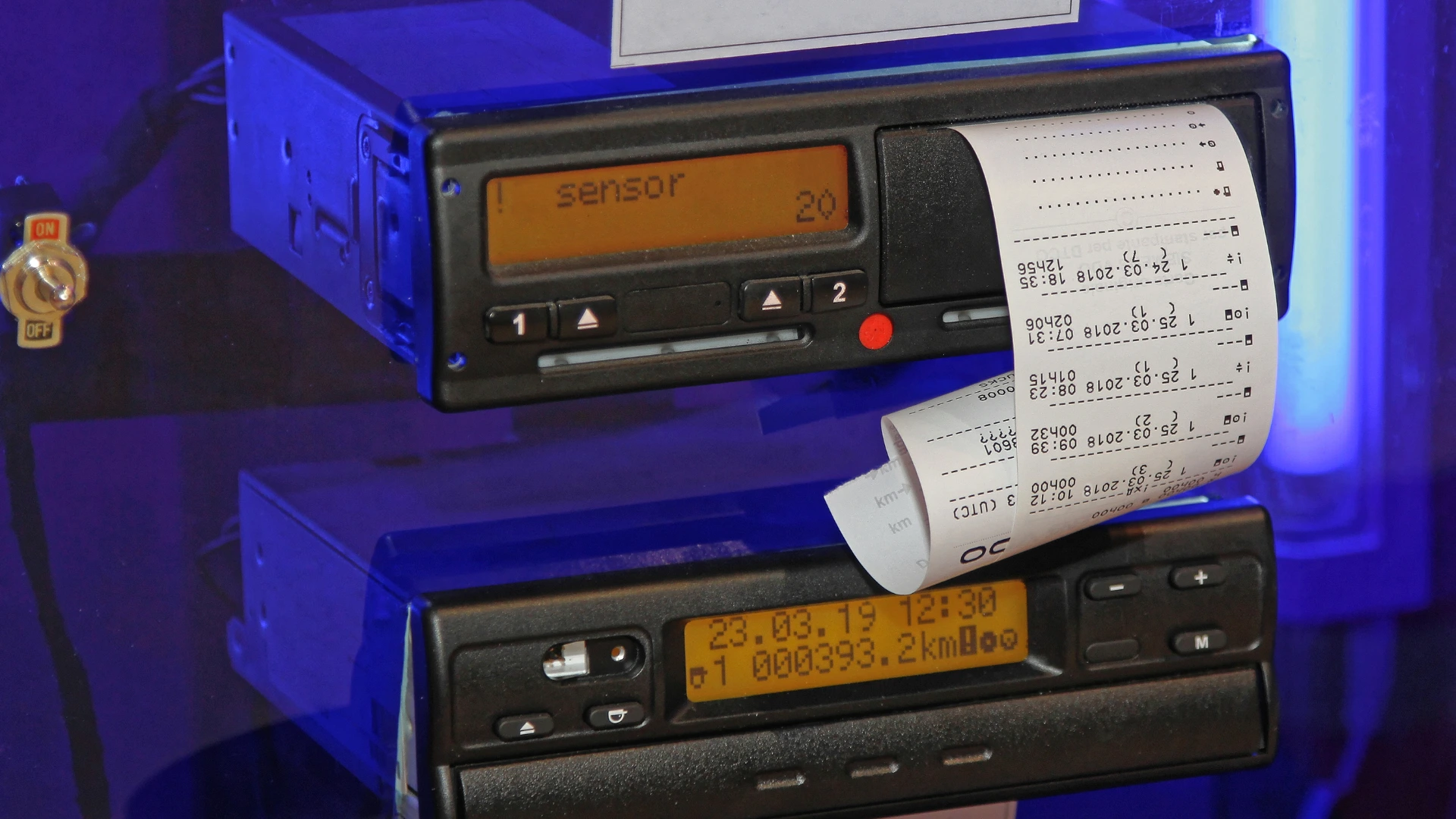
To control the work and rest regime of drivers, there are special technical devices, in particular, the Tachograph. This device records the driver’s working time, speed of movement, and the modes in which the driver is moving. The Tachograph also accounts for the time that the driver spent resting.
The work of long-haul drivers in Europe is regulated by international documents, as well as national laws of each country.
The work and rest regime for drivers in Europe is quite strict. The Tachograph records all performance indicators, and for non-compliance with the rules, the vehicle crew receives a fine.
According to the rules, long-haul drivers in the EU can work no more than 56 hours per week. Within one day, the vehicle is driven for 9 hours. The law allows extending the working day to 10 hours.
After four and a half hours of continuous driving, the driver must take a break. The break can last 45 minutes or more. During this break, the driver is not allowed to engage in other types of work: for example, unloading or washing the vehicle.
According to European rules, a long-haul driver must rest for 11 hours per day. But this time can be reduced to 9 hours, though this can only be done three times a week. The rest can be split into two stages, but one of them must last 9 hours in any case.
For non-compliance with the rules in Europe, fines are prescribed. For example, if a driver reduced the break time by 10 minutes, they will be fined 30 euros. And if the vehicle belongs to the driver – then it’s 90 euros. If the rest was prematurely ended by 15 minutes, the fine will already be doubled. Therefore, the driver’s work according to the Tachograph must be precise to the minute.

To get a job as a long-haul driver, it’s necessary to know the rules of driving according to the Tachograph. First, you need to obtain a special “driver’s card” in your country of residence, in other words, get a chip card. It looks similar to a driver’s license – the card contains various information about the driver, their name, photograph. The card needs to be inserted into the Tachograph. After this, a menu will appear before the driver. The Tachograph switches to driving mode automatically.

The “other work” mode also turns on automatically. It starts when, for example, the driver changes a wheel or processes documents. However, the rest mode needs to be turned on manually.
Follow us on social media
[qsm quiz=”1″]