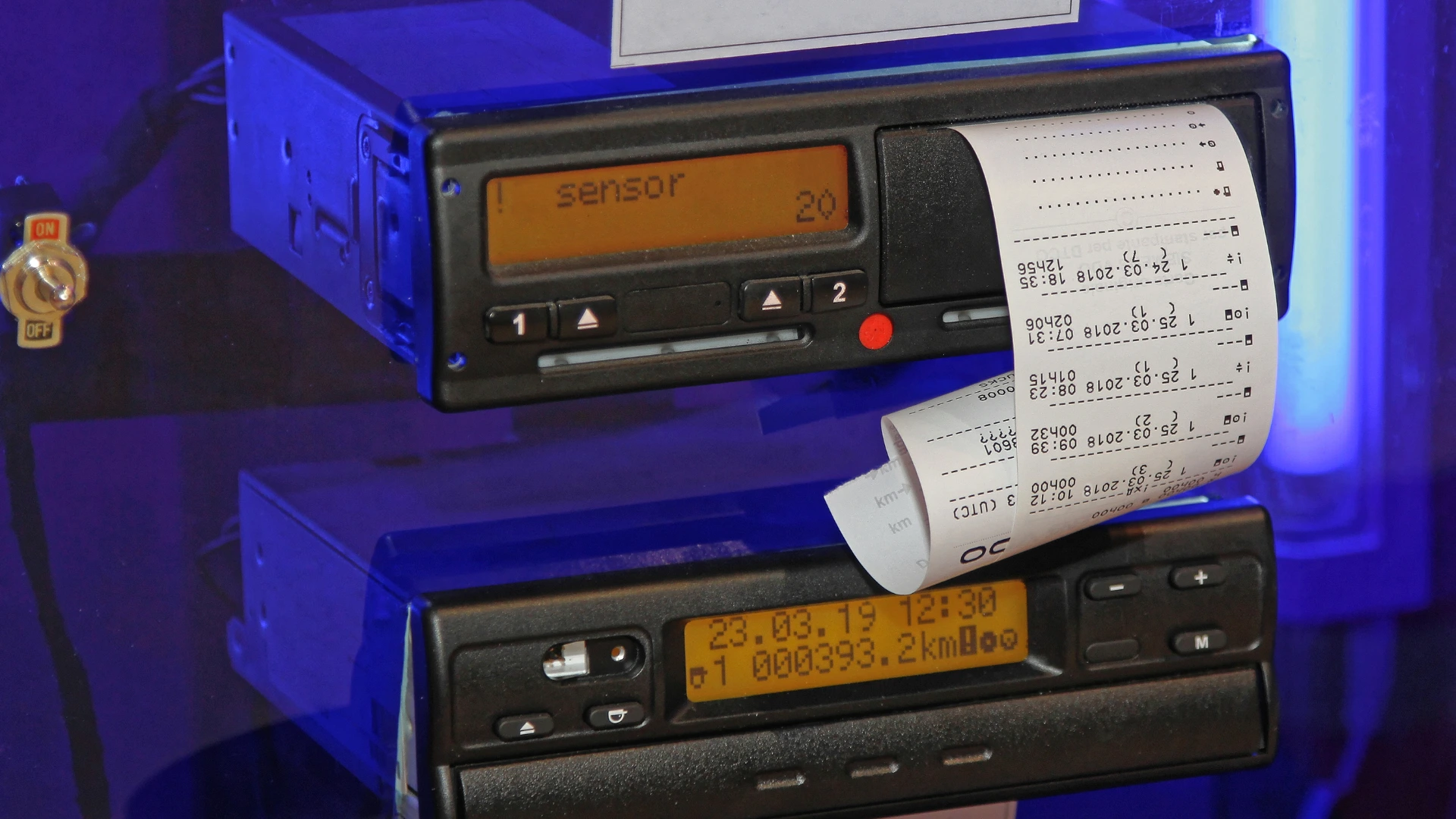
The “Ferry/Train” rule in the European Union allows a driver to legally interrupt their daily or weekly rest period to board a vessel (or train platform) and disembark. According to EU Regulation No. 561/2006, the total duration of rest interruption must not exceed 1 hour, and the driver must have access to a bunk or cabin. Incorrect activation of this mode in the Tachograph will lead to a “break” in the rest period, which is classified by inspections as a serious violation of working hours regulations and entails significant fines.
International driving work in Poland and other EU countries inevitably involves ferry crossings (e.g., to Scandinavia or the UK) or the use of trains (Ro-La). Many newcomers make a critical mistake: they believe that if the truck is on deck and they are drinking coffee in the cabin, the Tachograph will automatically record a proper rest period for them.
This is not the case. The European Commission regularly clarifies: the mere physical presence on a ferry does not make the rest legal if the driver has not met strict bureaucratic and technical requirements. Ignorance of these subtleties leads to fines from BAG/BALM or ITD ranging from 500 to 1500 euros.
In this expert article, we will thoroughly examine how the Ferry/Train exception works, how to press buttons in the Tachograph step-by-step, and how violations of working hours regulations can block your Residence permit in Poland application.
The main law regulating this area is Regulation (EC) No 561/2006 (Article 9). The exception was created so that the driver does not lose working time in port and can combine mandatory rest with ferry travel.
Basic conditions for applying the rule:
Previously, only daily (9 or 11 hours) and reduced weekly rest (24 hours) could be taken on a ferry. With the introduction of the Mobility Package, an important update appeared:
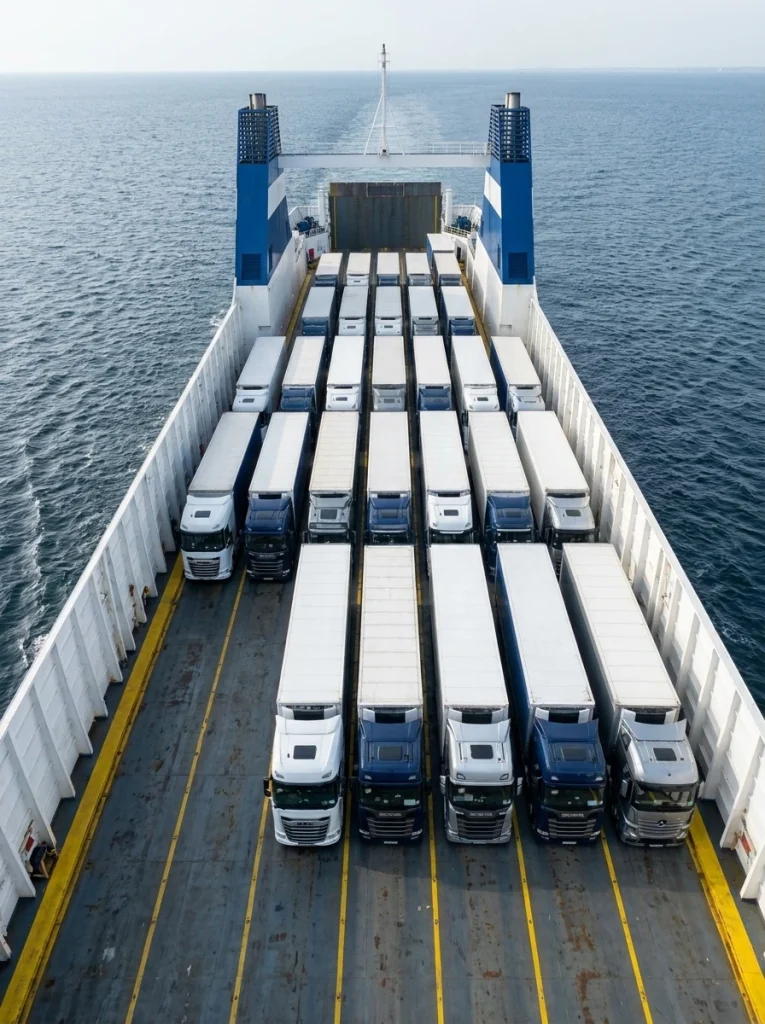
Your task is to prove to the inspector that the truck’s movement was purely a technical boarding onto the deck, and not the start of a new work shift.
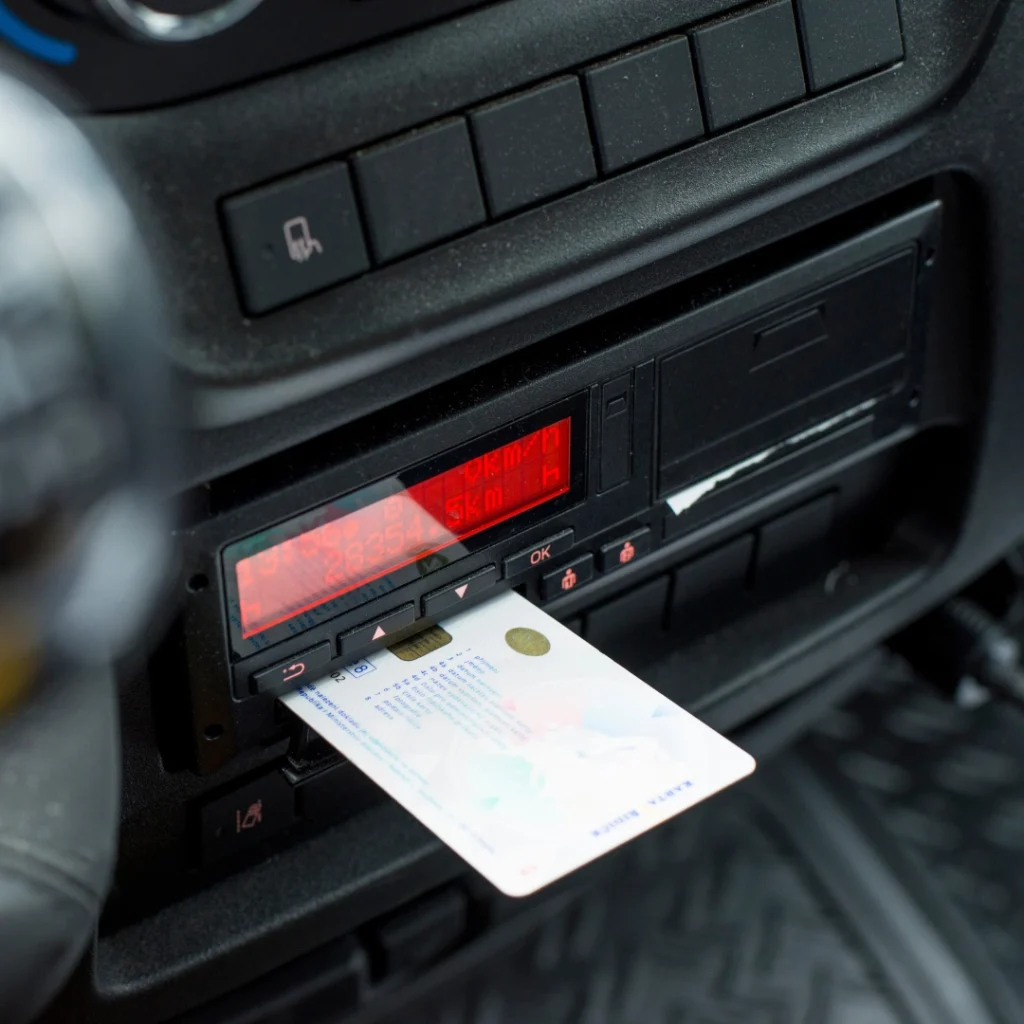
Practical algorithm of actions:
Practical advice: Always keep your ferry ticket (Boarding pass). During an inspection, the inspector has every right to request the ticket to compare the journey time with your Tachograph printout.
Working with trainees, we regularly analyze real fines on European roads. Here are the main “traps”:
For foreigners, documents for drivers in Europe are not only a license and chip card, but also legal migration status. How is the Tachograph connected to your Residence card? Directly.
Systematic violations of working hours regulations are recorded in European databases. Fines are issued to your Transport company. If, due to driver negligence, the company receives too many notices, it risks losing its license. If your company closes, your Residence card for driver work loses its basis, and the Legalization process is interrupted.
New Residence Permit Rules in Poland: Important Clarification
In the transport sector, new Residence permit rules in Poland are currently being actively discussed, aimed at digitalization and transferring the work of Municipal offices (Urząd) to the e-Pobyt portal. The main goal of the project is to reduce waiting times and issue Residence permits within 60 days in Poland.
Learning the Tachograph menu from online videos is a bad idea. In a critical situation at customs or when rushing to load, the driver gets confused with the buttons.
Code 95 in Poland is not just a plastic card. It is your professional shield. At “u Marka” driving school, we train students on real Tachograph simulators.
Quality training pays off on the very first trip, saving your nerves and salary.
The Ferry/Train rule is a convenient tool that allows long-haul drivers to save time and legally combine rest with ferry travel. However, its application requires meticulous precision: the total interruption time must not exceed 1 hour, the “Ferry” button must be pressed before starting to move, and the ticket must be kept for inspection. Study Tachograph operation, avoid foolish fines, and entrust your professional training to verified driving schools. A clean reputation on the road is the key to your successful Legalization and high income in the EU.
If you exceeded the 60-minute limit due to force majeure (e.g., ferry ramp breakdown or prolonged inspection), your rest will technically be “broken.” To avoid a fine, immediately make a printout from the Tachograph and write the reason for the delay on the back, referring to Article 12 of Regulation (EC) No 561/2006. Be sure to keep your ferry ticket and any documents confirming the delay.
Yes. Being on a ferry or train can count as a 45-minute driving break. The Ferry/Train rule (with interruption limits) primarily concerns daily and weekly rest. For a regular break, it is sufficient to switch to “Bed” mode.
Yes. According to the Mobility Package requirements, upon entering the territory of a new state, you must enter its symbol. If your Tachograph did not do this automatically via GPS (Smart Tacho 2), you must enter the country manually at the first legal stop after disembarking from the vessel.
Follow us on social media
[qsm quiz=”1″]