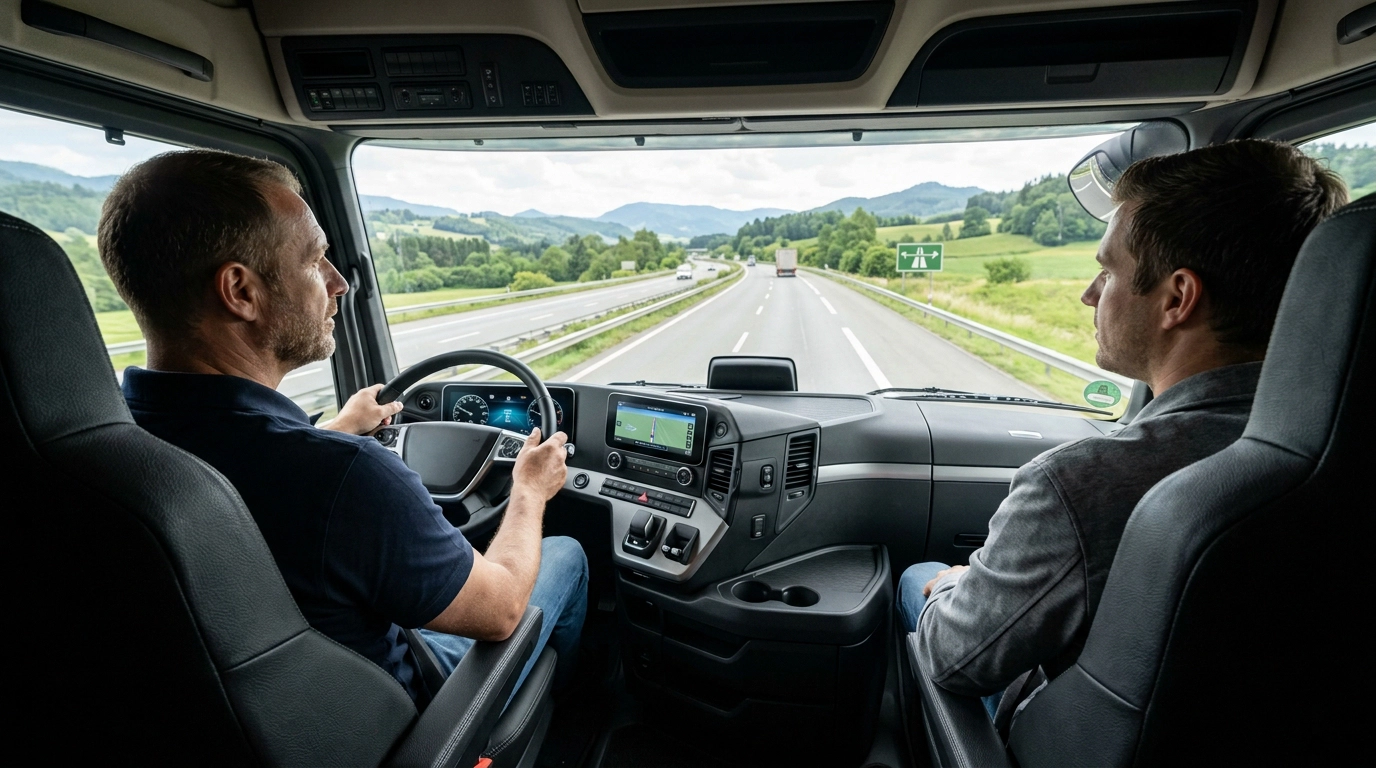
Working as a driver in Poland and carrying out international routes across Europe requires knowledge of dozens of local laws. EU driver fines are most often issued for failure to manually enter the country in the tachograph when crossing borders, violation of weekend driving bans (for example, in Germany and France), and unpaid road tolls in Europe. To avoid penalties, a long-haul driver must plan the route in advance taking into account national regulations, use the correct on-board units (OBU), and have up-to-date driver documents for Europe, including a valid Code 95.
For a passenger car, Europe is a single space where borders can be crossed without even slowing down. But for the driver of a 40-ton truck, crossing the invisible line between states means an instant change of legal framework.
Each country has its own environmental standards, road payment systems, speed limits, and driving ban schedules. German inspection authority BALM (formerly BAG), Polish ITD, or French DREAL do not accept excuses like “I didn’t know” or “in Poland we can do it this way.” Any mistake hits your wallet: fines run into hundreds, and sometimes thousands of euros.
In this article, we, as expert practitioners, will examine the main differences in national regulations. You will learn how freight transport regulations work in Germany, where blind spot stickers are required, and how violations on the road can block your residence permit application in Poland.
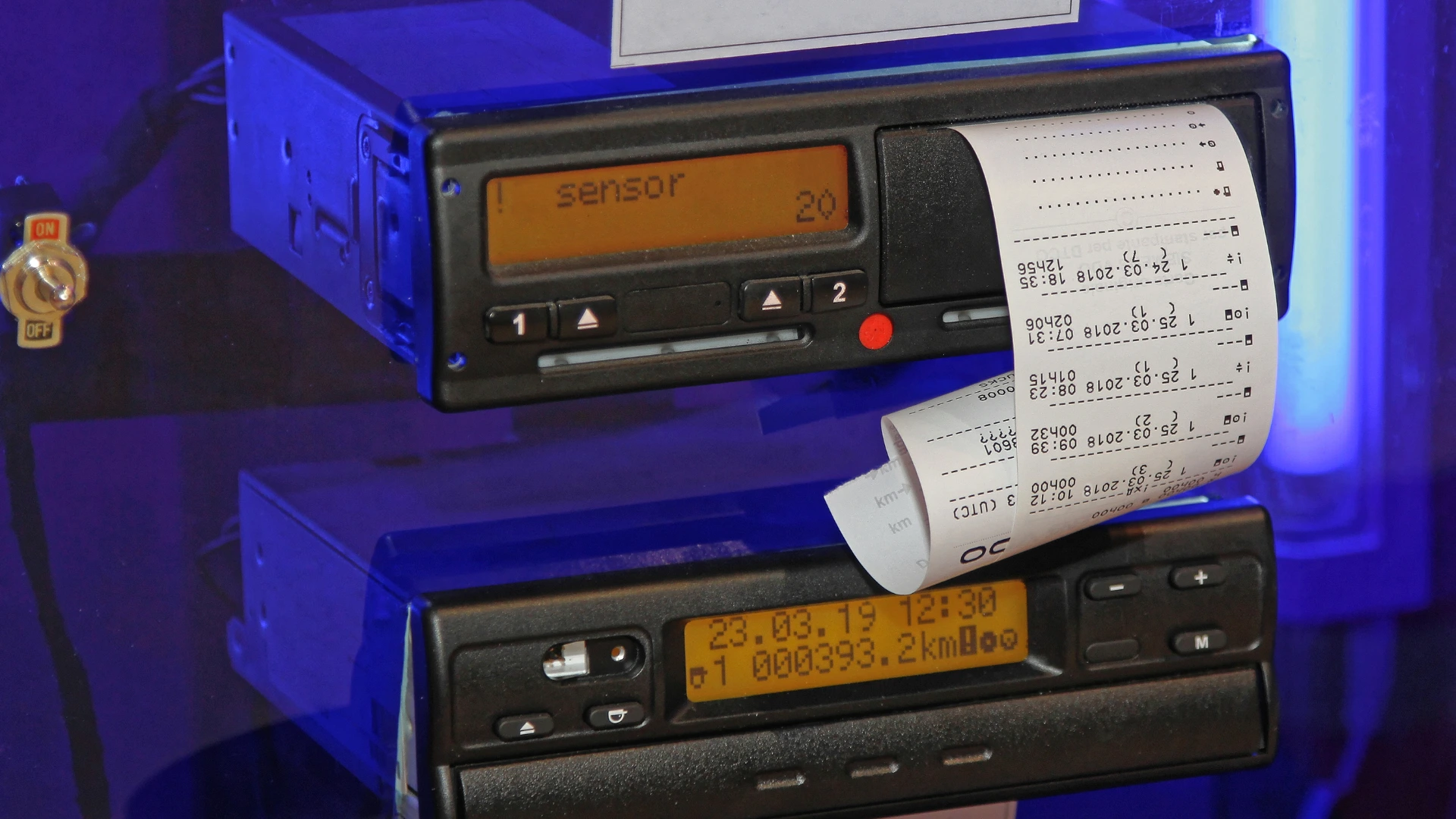
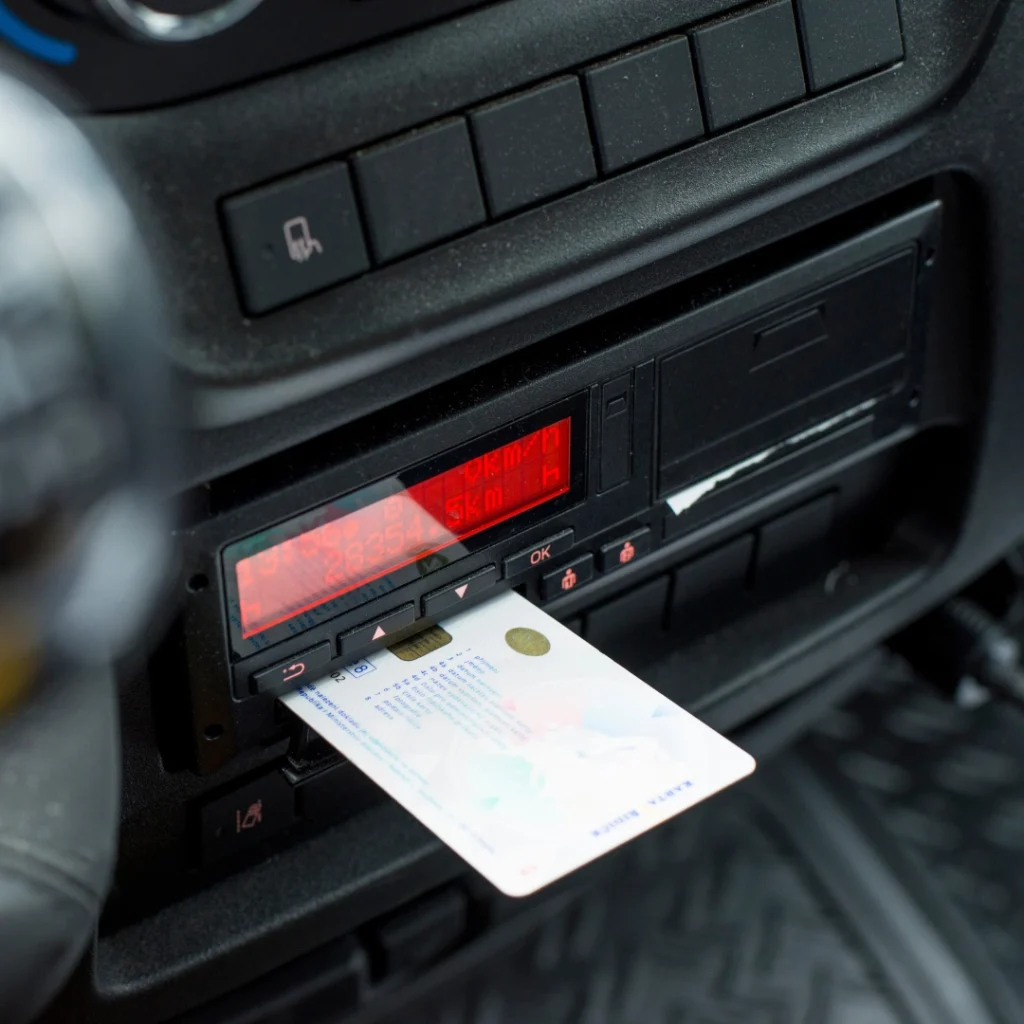
Since February 2022, the Mobility Package has required all drivers to record the fact of crossing a border in the digital tachograph. This is a tool for monitoring cabotage and posted work.
How it works in practice now:
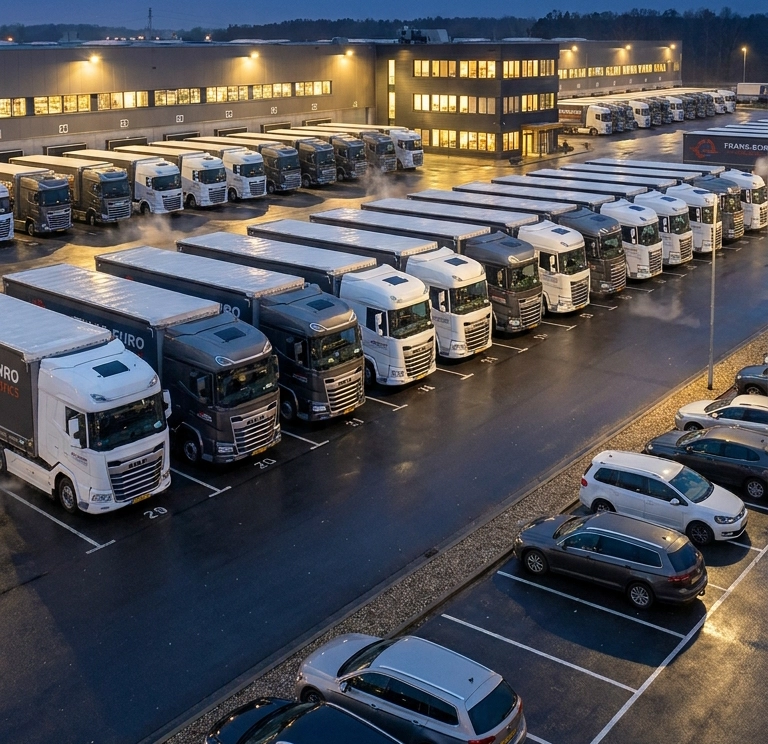
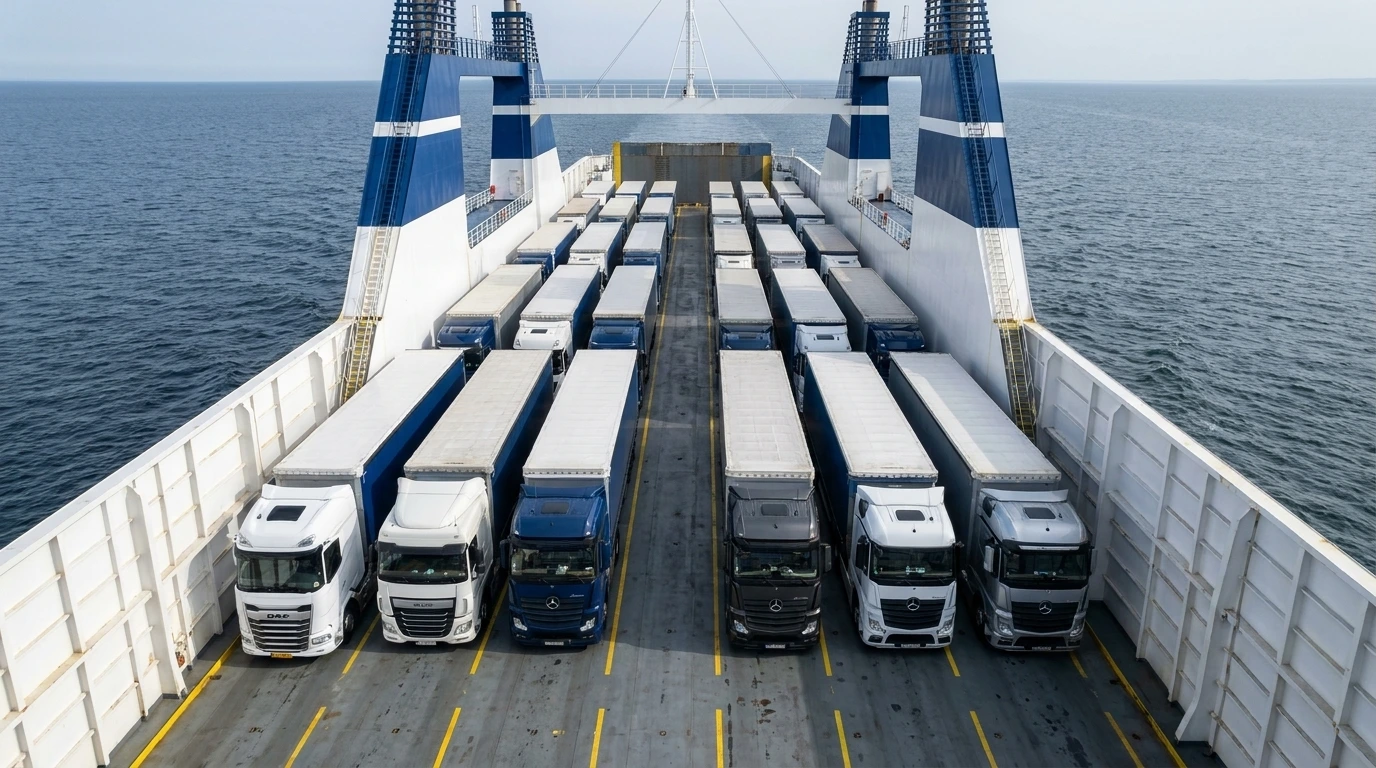
Traffic jams caused by trucks are a problem that EU countries solve in different ways. Understanding ban schedules is critically important for planning work and rest periods.
Freight Transport Regulations in Germany (Sonntagsfahrverbot)
France: Weekend Specifics
Who is allowed to drive during the ban? Exceptions apply to refrigerated vehicles transporting perishable goods (fresh meat, milk, live fish). However, if you are carrying chocolate or canned goods in a refrigerated truck, you cannot drive during the ban.
Road payment in the EU is not standardized. If you have entered a new country and your on-board unit (OBU) has not beeped—expect problems.
Requirements for vehicle equipment and safety also vary from border to border.
Novice drivers rarely connect road violations with their immigration documents. However, in the European Union, these databases are closely interlinked.
How violations affect documents: If you systematically violate regulations (for example, fail to pay road tolls), fines are sent to the transport company. If the company loses its license because of this, you are left without work.
Without a valid employment contract, your residence card for working as a driver may be revoked. Immigration inspectors (Urząd Wojewódzki) when reviewing cases also check your police record. Unpaid personal fines can become grounds for refusal.
Important legal clarification: In 2025-2026, the Polish government announced new residence permit regulations in Poland aimed at digitalization and speeding up the process. The draft mentions a goal of residence permit in 60 days in Poland. However, at the time of preparing this material, this is only a planned target timeframe, not a guaranteed result. The speed of legalization directly depends on the perfect cleanliness of your documents, absence of debts and legal problems. For the process to go smoothly, your work as a driver in Poland must be impeccable in legal terms.
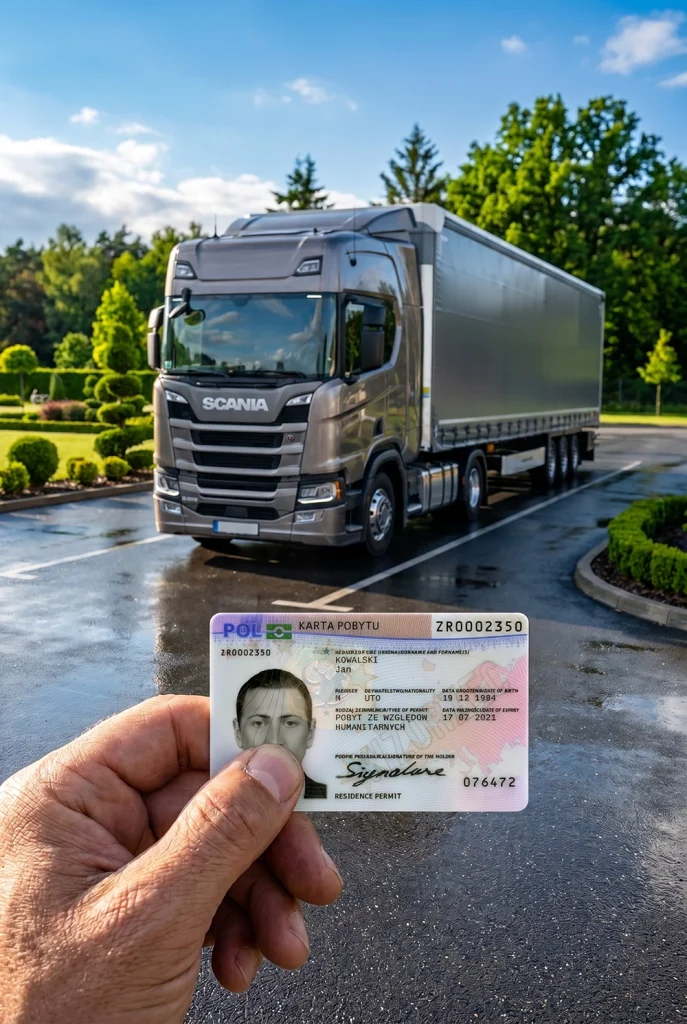

It is impossible to learn all the nuances of EU national laws through forums and videos. Knowledge must be systematized and supported by practice.
At the driving school and training center “Code 95 at Mark’s” (StarTruck) we do not waste students’ time on outdated theory.
Quality training is your best insurance against stress and fines on European roads.
The European Union is a complex mechanism where each region has its own transport regulations. Ignoring the laws of Germany, France, or Austria will inevitably lead to fines that will consume your entire salary. Plan trips taking into account local holiday calendars, monitor the functionality of on-board toll payment devices, and enter data into the tachograph in a timely manner. Improve your qualifications, seek training from professionals, and your career as a long-haul driver will be stable and safe.
You do not have the right to continue driving on the motorway for free. According to Toll Collect regulations, you are required to stop and pay for the further route manually (through a mobile app or terminal at the nearest rest area). After that, you need to contact the dispatcher to replace the device.
By law, you are required to stop at the first available and safe parking area after crossing the border. If the nearest parking area is 15 kilometers away and it is completely full, you drive to the next one. However, an inspector may check by GPS whether you really could not stop earlier.
Yes. According to the Mobility Package, the ban applies only to regular weekly rest (45 hours or more). Reduced weekly rest (24 hours) or daily breaks (9 and 11 hours) are permitted in the cab, provided that the truck is parked in a legal parking area and equipped with a sleeping berth.
Follow us on social media
[qsm quiz=”1″]