Telegram bot for truck drivers: How our BOT helps drivers on the road, with documents and more
@truck_drive_bot is a Telegram bot created specifically for truck drivers. It helps plan routes according to Tachograph regulations, create message templates in foreign languages, work with CMR documents, prepare for inspections, and handle emergency situations on the road. The bot does not replace a dispatcher and does not provide legal advice—but it takes care of routine tasks, saving the driver time and stress on every trip.
Introduction: Why a driver needs a "second brain"
A modern truck driver is not just a person behind the wheel. They are a logistician, document specialist, negotiator, and technical expert all at once. During a single trip on the Poland–Germany–Netherlands route, a driver solves dozens of tasks: correctly close a shift according to the Tachograph, write an ETA to the dispatcher in English, record damage on a pallet in the CMR, defend payment for waiting time, explain a delay at the warehouse.
Each of these tasks is small. But together they consume an enormous amount of energy. Especially if the language is not native, experience is limited, and there is no internet at the parking area.
@truck_drive_bot is created as a tool that a driver keeps at hand—like a notebook with smart content. Let us examine what exactly it can do and who will really benefit from it.
What is @truck_drive_bot and how to work with it
The bot is available on Telegram at @truck_drive_bot. No applications, registrations, or subscriptions—simply open the chat and write your request in natural language.
To make the bot as useful as possible from the first interaction, it is sufficient to answer six questions:
- Type of transport: tarpaulin, refrigerated, container, tanker, solo truck or combination.
- Routes and corridors: for example, PL–DE–NL–BE or ES–FR–DE.
- Status: driver employed by a company or owner-operator.
- Template language: EN / DE / PL / FR.
- Main concern: Tachograph, waiting time, documents, theft, service, communication with warehouse.
- Type of assistance: “in the moment” (messages and solutions right now) or systematic (plan, tables, templates for the future).
This is not a mandatory questionnaire—you can immediately ask a specific question. But the more precise the context, the more precise the answer. The bot adapts recommendations to your type of trip and route.
What the bot can do: Breakdown by function

1. Route planning according to Tachograph regulations
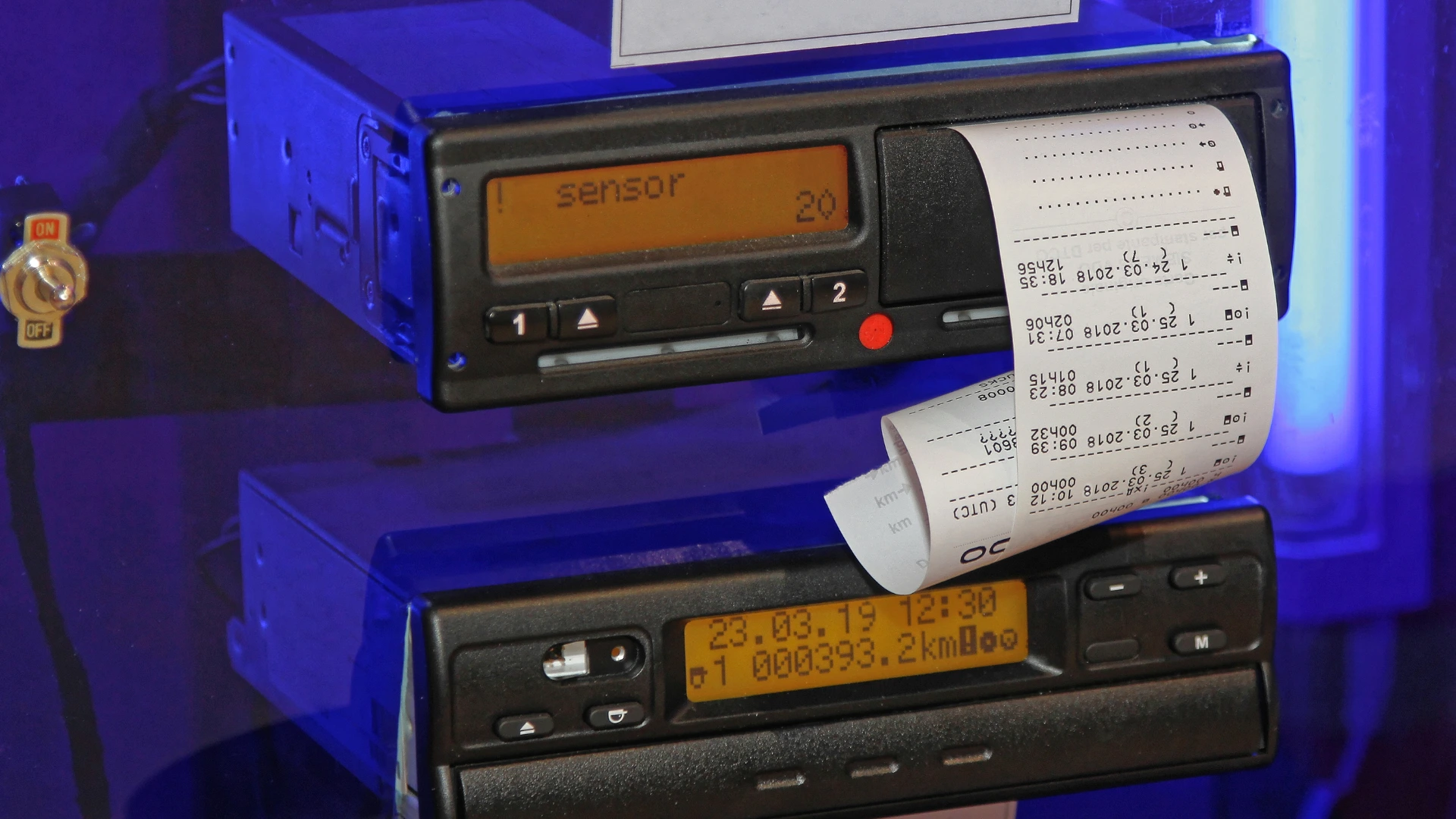
This is perhaps the most requested function. The Tachograph is an eternal headache: where to take a break, how to “finish” a shift, when to take a reduced night rest, how to avoid a fine during a traffic jam in Belgium.
The bot can:
- Break down the route into “legs” according to HOS rules: 4:30 driving → 45 minutes break, daily and weekly rest periods.
- Build plan “A” and plan “B”—in case of traffic jams or an emergency situation.
- Create an “ideal week” for your typical trips, so you do not have to recalculate everything every time.
- Answer a specific question: “I have 1:40 of driving time left, the warehouse is 2:10 away, what should I do?”
Important note: The bot helps with calculation logic and explains the rules “in human terms.” Final verification of the regime before a problematic section is best done with a Tachograph printout in hand.
2. Documents and correspondence in foreign languages
One of the most practical sections for Russian-speaking drivers in the EU.
What the bot provides:
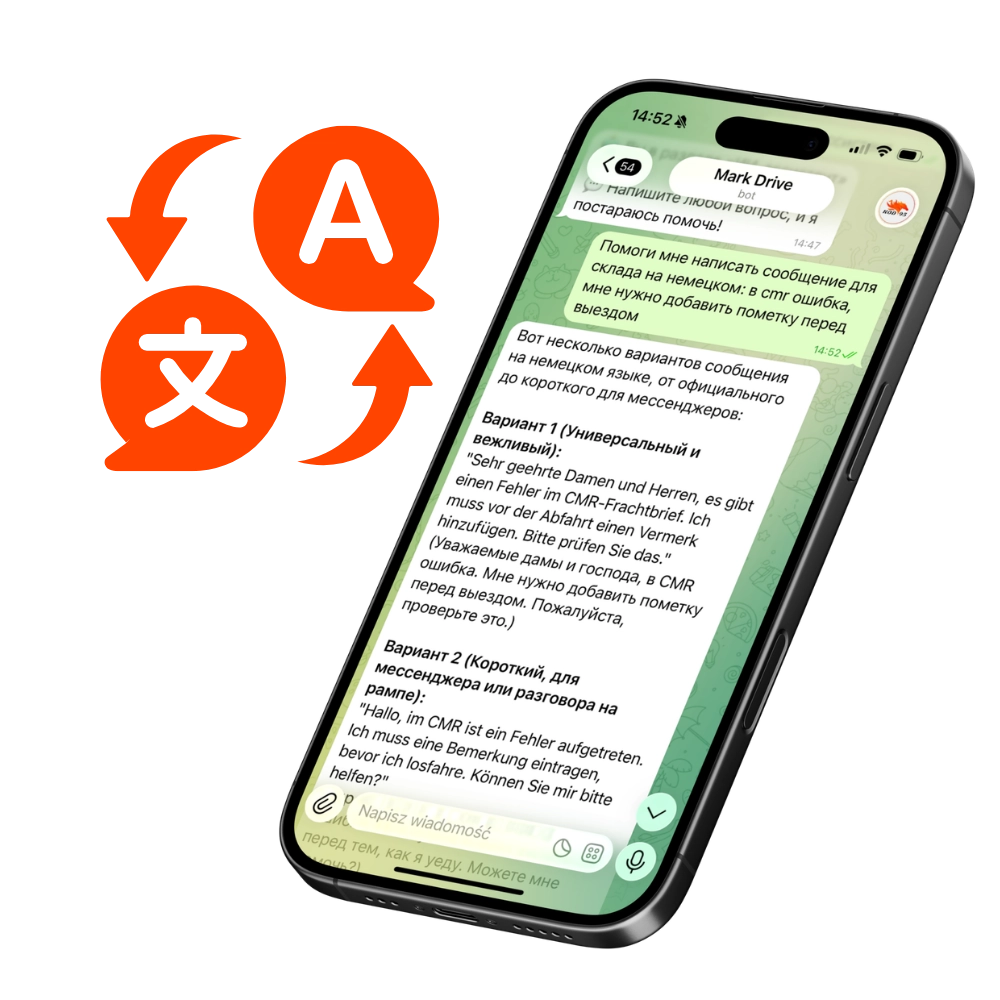
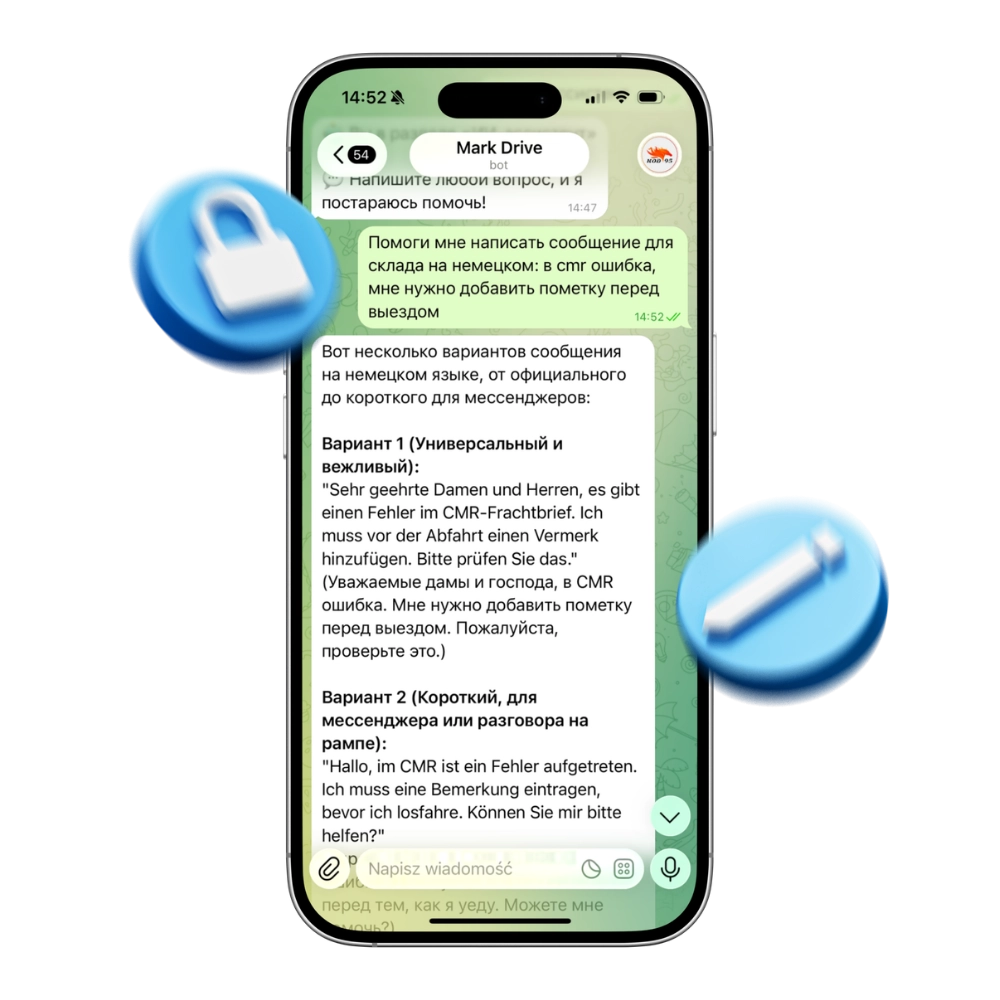
- Ready-made message templates for the dispatcher and warehouse in English, German, Polish, French: ETA, delay, document issue, refusal for safety reasons.
- Templates for specific situations: “I’m at the gate”, “Waiting time started at 14:30”, “No loading without additional straps”, “CMR discrepancy—I’m adding a note”.
- CMR breakdown: which fields are critical, what to write in the damage section, how to formulate a reservation so that it has meaning.
In practice, it is precisely the lack of ready-made phrases that forces drivers to remain silent or agree where they need to defend their rights. The bot provides these phrases in the required language in 30 seconds.
Disclaimer: The bot helps with wording and structure—but legal nuances (claims, appeals, cargo disputes) require consultation with a specialist or the legal department of the Transport company.
3. Working with CMR and recording damage
A correctly completed CMR is the driver’s only protection in a dispute about the condition of the cargo. But most drivers fill it out “on autopilot,” not understanding what exactly they are signing.
The bot explains:
- Which fields in the CMR are filled out by the driver, which by the sender, which by the recipient.
- What to write in “Carrier’s reservations” (box 18) if the packaging is damaged or the goods are wet.
- How to describe a discrepancy: not “cargo is bad,” but “pallet No. 5—dent on the side, traces of moisture on the lower boxes.”
This is directly related to money. A driver without a reservation in the CMR is the one to blame in any dispute.
4. Solving problems during loading and unloading
The warehouse has not allowed entry for two hours. Waiting time is not being recorded. The warehouse worker demands signing the CMR “blindly.” The cargo is clearly not the stated weight. Familiar situations?
The bot offers:
- Negotiation scripts—how to politely but firmly defend payment for waiting time and the right to safety: in Russian, Polish, English, German.
- Photo documentation checklist: pallets, securing, corners, seals, damage, temperature in the refrigerated unit—what to photograph and in what sequence so that the photos are evidence, not just snapshots.
- Action algorithm in case of warehouse refusal: what to record, what to write to the dispatcher, what to enter in the CMR.
From real practice: Drivers who have a ready-made documentation checklist resolve conflicts during loading significantly faster on average. Because they know what to do—and the warehouse senses this.

5. Cargo securing and emergency situations
The bot does not replace a safety instructor, but provides “reminders” that work as a prompt:
- What to use for which type of cargo: straps, corner protectors, anti-slip mats, braces.
- When to use compression, when to use blocking.
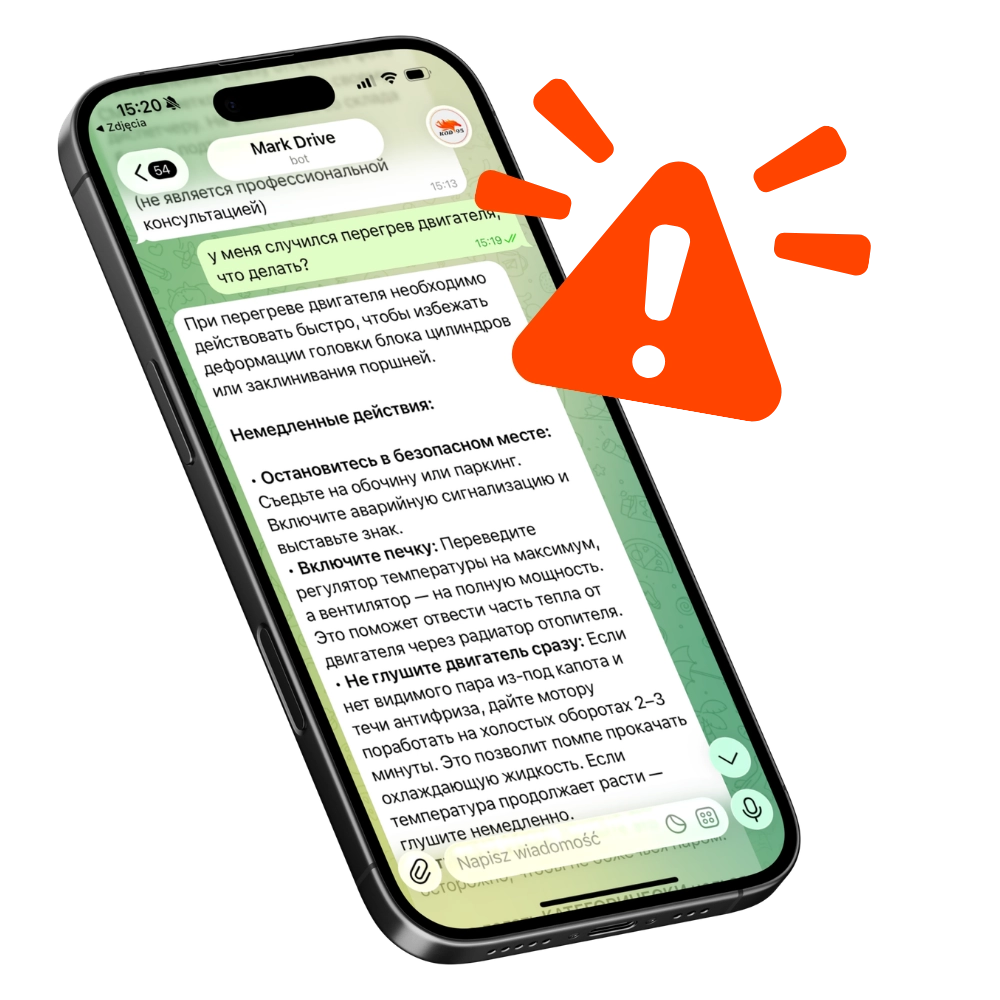
- Algorithms for emergency situations: puncture, engine overheating, AdBlue/DPF errors, “won’t start,” air leak, EBS signal. No dangerous advice—only what to check and who to call first.
- How to minimize the risk of cargo theft: which parking areas, which habits, how to work with seals.
This is especially useful for those traveling unfamiliar routes or working with new equipment. The bot provides guidance—and then you make the decision.
6. Preparing for an inspector's check
A BALM, ITD, or DREAL inspector has stopped you on the road. You have 30 seconds to get ready.
The bot helps in advance:
- Compile a list of “what they usually ask” and arrange documents so you do not search for them frantically.
- Prepare questions for the inspector and gather evidence (Tachograph screenshots, printouts) if you are confident there are no violations.
- After a fine: what to record, which documents to save for the employer and for a possible appeal.
Appeals and legal matters—only general information. The final decision is with a lawyer or the legal department of the Transport company.
7. Expense optimization and daily life on the road
This is a section that is underestimated—and wrongly so. The difference in expenses between an “experienced” and a “beginner” driver on the same route can amount to 300–500 euros per month.
The bot helps:
- Keep accounting tables: fuel, AdBlue, toll roads, washes, parking, recorded waiting time—in euros and zlotys.
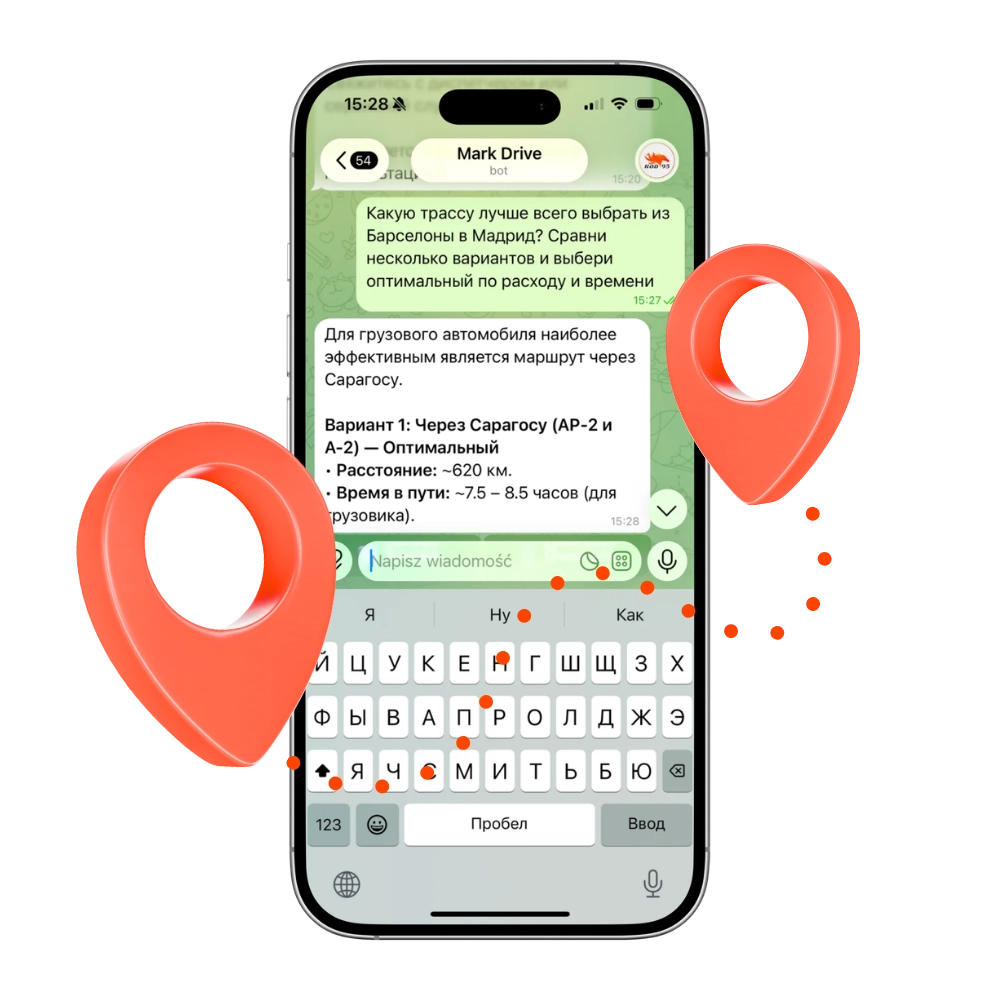
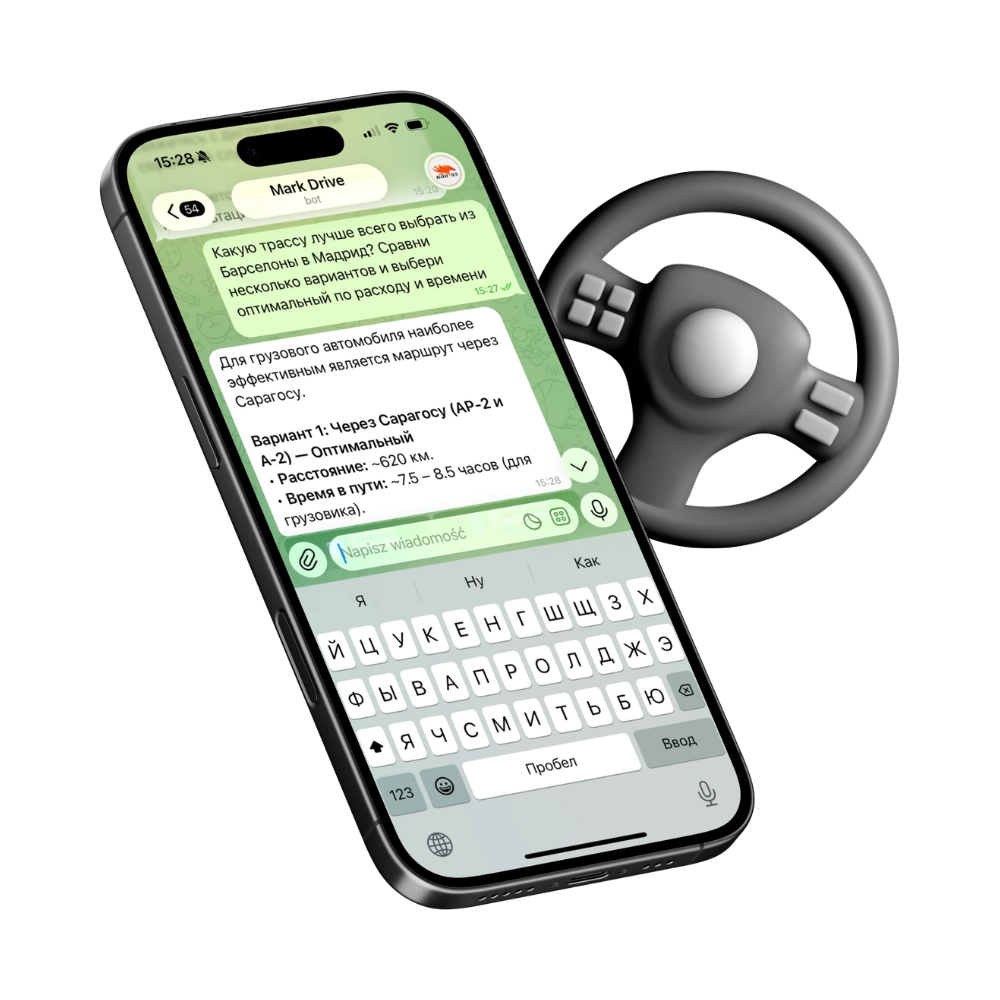
- Compare options: toll road or detour through villages, ferry or bridge/tunnel—by time, fuel, fees.
- Plan food on the trip: shopping list, storage without a refrigerator, simple “no kitchen” menus, drinking regime on hot routes.
The last point sounds trivial—until you end up in an August traffic jam near Lyon for 8 hours without food and water. Experienced drivers have long known: daily life on the road = work capacity.
8. Career and job search
For those who are just entering the profession or want to grow:
- Job vacancy breakdown: what to look at—pay, routes, trip countries, parking conditions, salary deductions.
- Creating a CV and cover letter in English, German, or Polish.
- Professional development plan: ADR, refrigerated, containers, special transport—which course to start with and how to build a career.
This is useful for those currently undergoing training or who have just received Code 95. The first CV in English is a task that stops many. The bot removes this barrier in a few minutes.
For whom this bot will be most useful
- Beginners in international transport—the bot explains Tachograph rules “in human terms,” without dry theory, and provides ready-made templates for communication with warehouses and dispatchers on first trips.
- Experienced drivers with a language barrier—quick templates in EN/DE/FR at the right moment, without Google Translate with its awkward constructions.
- Owner-operators—expense tracking, route comparison, correspondence templates with clients.
- Those preparing for an exam or inspection—breakdown of specific Tachograph situations, preparation of questions for the inspector.
What the bot does not do—and this is honest
It is important to understand this immediately to avoid disappointment:
- Does not replace a dispatcher and freight forwarder. Operational decisions regarding cargo, changes to the trip, coordination with the client—this is human work.
- Does not guarantee data accuracy. Road restrictions, truck bans, ferry schedules, border crossing hours—all of this changes. Before a critical decision, do a quick fact-check through official sources. The bot can help with this too—but the final verification is on you.
- Does not provide legal advice. Cargo claims, fine appeals, labor disputes—consult a lawyer.
Honesty about these limitations is a plus, not a minus. The bot does well what it can do and does not claim more.
Connection with training: Bot + Code 95
At “Code 95 U Marka” we often hear from students: “I passed the exam, received the qualification card—but how do I actually work now?” Theory and trip practice are different things.
@truck_drive_bot closes precisely this gap. It does not teach driving and does not replace the Code 95 course—but it helps apply knowledge in practice: correctly calculate regimes, not get lost during loading, communicate competently with a foreign warehouse.
Conclusion
The profession of truck driver in the EU is becoming increasingly technically and documentarily complex. Tachograph, CMR, BALM, multilingual warehouses, electronic CMR, weight control—this is not theory, this is daily reality. @truck_drive_bot is created as a practical tool for those who want to work competently, not “by feel.” Write your first request to the bot—and see how quickly it becomes part of your workflow.
FAQ: Frequently Asked Questions
Is the bot free?
- Yes, completely free. Simply open Telegram and write to @truck_drive_bot.
Is registration required?
- No. It is sufficient to open Telegram and write to the bot—without registration, subscription, or installation of additional applications.
Is the bot suitable for those who have just received Code 95 and are looking for their first job?
- Yes. The “Career” section helps analyze vacancies and create a first CV. And the sections on Tachograph and CMR perfectly complement theoretical knowledge from courses with real practice.
Does the bot know current road restrictions in Europe?
- The bot can help find information and explain where to verify it. But for critically important data (bans, queues, ferries), always do a final check through official sources—this is a rule that the bot itself will remind you of.
Article author:
Марк Резник
Read also
Follow us on social media


